21 Ancient Folk Art Paper Backgrounds for Timeless Design
There is a certain weight to history that digital design often struggles to convey. We live in an era of vector-perfect gradients and flawless pixel grids, yet there is a growing hunger for texture, grit, and the tactile feel of the physical world. This is precisely where the 21 Ancient Folk Art Paper Backgrounds collection steps in. It is not merely a set of digital images; it is a bridge between the raw, unpolished beauty of traditional craft and the precision of modern software.
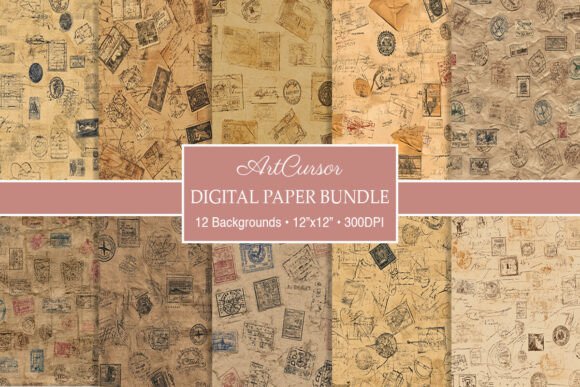
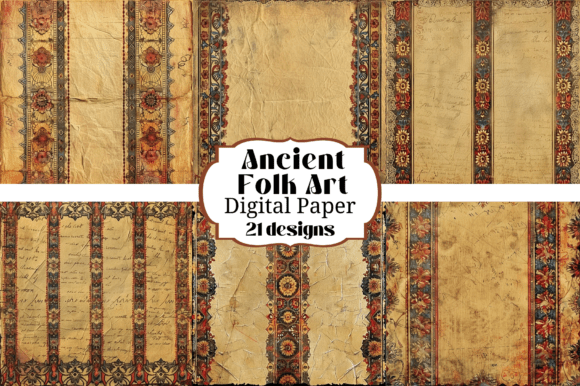
These backgrounds are defined by their imperfection, which is their greatest strength. You will notice the subtle grain of aged paper, the delicate bleeding of pigments, and the intricate motifs reminiscent of block printing or hand-stamping. The aesthetic draws heavily from global traditions—think Mughal art, Toile de Jouy, or Eastern European embroidery patterns—rendered with a soft, weathered palette. The "personality" of this set is earthy, nostalgic, and deeply authentic. It avoids the gloss of commercial stock photography in favor of something that feels hand-pressed and discovered in a vintage market.
Visual Characteristics and Texture
When evaluating design assets, the technical execution is just as important as the visual style. These 21 Ancient Folk Art Paper Backgrounds are provided as high-resolution PNG files. This format is crucial for designers because it supports transparency and offers uncompressed quality. Unlike the samples you often see in previews, your downloaded files will be significantly larger, allowing you to scale them for large-format printing without pixelation.
The texture depth varies across the collection. Some sheets feature heavy distressing and deep creases, perfect for a grunge aesthetic, while others offer a cleaner, smoother vintage finish suitable for legible typography overlays. The color palettes lean towards sepia, indigo, ochre, and faded terracotta. These are not garish, neon colors; they are grounded tones that evoke a sense of history.
For those working in editorial design or packaging design, these textures add immediate depth. A flat digital illustration can instantly look like a scanned artifact when placed over one of these backgrounds. This shift in visual hierarchy—from flat digital to textured analog—can change how an audience perceives the value of a product, suggesting craftsmanship and timelessness over mass production.
Strategic Applications for Creatives
The versatility of the 21 Ancient Folk Art Paper Backgrounds makes them a staple for a wide range of projects. They are not limited to one specific niche, but rather serve as a foundational layer for various creative endeavors.
- Scrapbooking and Junk Journaling: This is the most direct application. The files are print-ready and provide the perfect base layer for digital or hybrid journaling. They replace the need for physical paper stacks, offering infinite variety without the storage issues.
- Web Design and UI: In an age of minimalist sans serif font layouts, a textured background can be used to create "break" sections on a landing page. It draws the eye and signals a shift in content, perhaps moving from technical specs to a brand story.
- Social Media Graphics: Content creators on platforms like Instagram or Pinterest can use these backgrounds to create cohesive, moody feeds. They work exceptionally well for quotes, recipe cards, or announcements, providing a visual anchor that keeps the grid looking unified.
- Logo Design and Brand Identity: While a background isn't a logo itself, it is essential for brand identity presentations. Presenting a premium font or a logo design on a textured, folk-art background immediately contextualizes the brand as artisanal, heritage-focused, or organic.
Pairing Typography with Textured Backgrounds
One of the most common mistakes in graphic design is choosing the wrong typeface for the background. When you are working with a busy, intricate background like those found in this collection, your typography must fight to be legible without fighting the background for attention.
Avoid using highly decorative script fonts or handwritten fonts directly over the most detailed areas of the paper. The visual noise will make the text unreadable. Instead, consider these pairing strategies:
- The High-Contrast Serif: Use a bold, modern serif font in a solid, dark color. The serifs provide structure that contrasts with the organic, flowing lines of the folk art motifs.
- The Clean Sans Serif: For a more contemporary look, pair the vintage backgrounds with a geometric sans serif font. This juxtaposition of old and new creates a dynamic tension that feels fresh and professional.
- The Text Box Approach: If the background is too intricate, place a semi-transparent white or cream box behind your text. This creates a "safe zone" for your content, ensuring the readability remains high while the edges of the background blend into the design.
Practical Considerations for Commercial Use
Before integrating these assets into a client project or a commercial product, it is vital to understand the licensing. The 21 Ancient Folk Art Paper Backgrounds are a digital download, meaning you are purchasing the right to use the files, not the files themselves.
You may use them in your personal and commercial projects—such as printed invitations, web banners, or digital planners. However, you may not resell the digital files as-is. You cannot package these backgrounds into a new digital paper pack and sell it to other designers. The goal is to use these assets to create something new, not to redistribute the raw material.
Additionally, always check the resolution before sending a file to print. While the PNGs are high-res, you should ensure your final canvas size matches the output requirements. A background that looks sharp on a phone screen might look soft on a large-format poster if not scaled correctly.
Elevating Your Projects
Ultimately, the value of the 21 Ancient Folk Art Paper Backgrounds lies in their ability to tell a story. In a digital landscape saturated with sterile, stock imagery, these textures offer a return to the tangible. They suggest that the creator values tradition, patience, and detail.
Whether you are a small business owner designing packaging for a homemade candle, a blogger creating a header image for a history article, or a designer building a brand identity