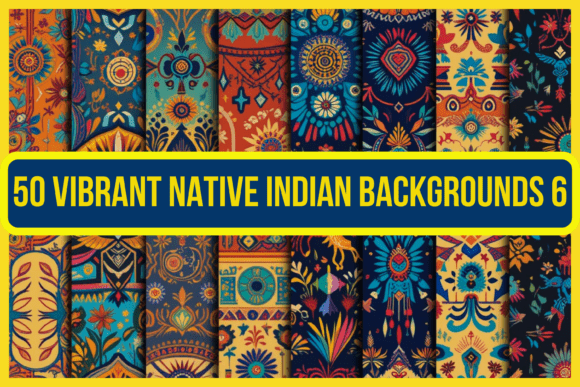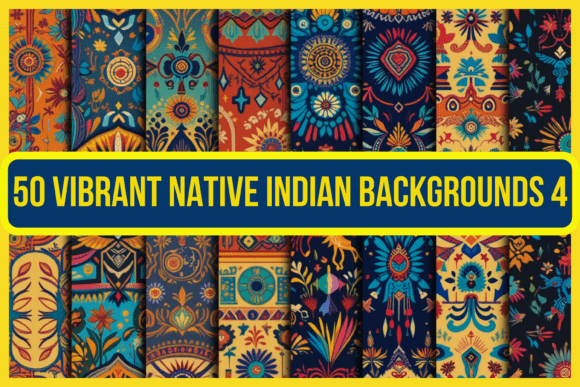
Native American Pattern Backgrounds 3: A Designer's Heritage Toolkit
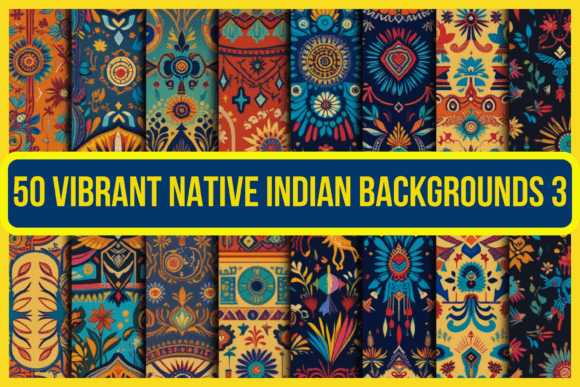
When you first encounter Native American Pattern Backgrounds 3, you're not just looking at another set of design assets. You're seeing centuries of storytelling, craftsmanship, and cultural symbolism distilled into repeatable motifs that work across modern creative projects. This particular collection stands out because it balances authenticity with versatility—those intricate geometric designs featuring arrows, zigzags, diamonds, and totemic symbols carry real weight without overwhelming your layout.
The visual personality here leans toward bold symmetry and earthy richness. Think deep reds, turquoise, warm browns, stark blacks, and clean whites. These aren't arbitrary color choices. They represent land, sky, water, and fire—the foundational elements in many Indigenous traditions. Some variations in the collection push into brighter, more contemporary territory, which opens doors for projects that need energy without losing that grounded, heritage feel.
Where These Backgrounds Actually Work
I've seen designers struggle with pattern backgrounds that look stunning in isolation but fall apart in context. Native American Pattern Backgrounds 3 avoids that trap because the repeating structures are tight enough to read as texture at small scales and detailed enough to command attention when featured prominently.
For brand identity projects, especially those tied to outdoor brands, wellness companies, artisan goods, or cultural organizations, these patterns add instant depth and narrative. They work beautifully as secondary elements in logo design—think subtle background textures behind wordmarks or as borders on packaging design. The key is restraint. Let the pattern breathe without competing with your primary typography.
In editorial design, these backgrounds excel as chapter openers, pull-quote backgrounds, or section dividers. Magazine layouts covering travel, culture, or lifestyle topics benefit enormously. The geometric repetition creates natural visual rhythm that guides the reader's eye without relying on heavy-handed layout tricks.
Digital applications are where things get really interesting. Website headers, social media graphics, and even email newsletter backgrounds gain personality instantly. The SVG versions scale cleanly across devices, while PNG files with transparency make layering straightforward. For web design, I'd recommend using these as hero section backgrounds with a subtle overlay—dark enough to maintain text readability but visible enough to establish mood.
Print and Physical Products
Textiles are the natural home for these designs. Blankets, scarves, tote bags, and apparel printing all benefit from the seamless repeat structure. Home décor applications—throw pillows, curtains, wallpaper accents—work equally well. The earthy color palette pairs naturally with wood, leather, and ceramic materials, making these patterns ideal for product photography backdrops or e-commerce presentation.
Working With the Files: Practical Considerations
Native American Pattern Backgrounds 3 typically comes in multiple formats, and choosing the right one matters. PNG files give you immediate transparency and work well in most design software—Photoshop, Canva, Figma, even PowerPoint if you're building presentations. SVG files are your best friend for anything that needs to scale. Logo applications, large-format printing, or responsive web backgrounds all benefit from vector precision.
When evaluating whether this collection fits your project, start with tone. These patterns communicate tradition, craftsmanship, connection to nature, and cultural respect. If your brand or project aligns with those values, you're in the right place. If you're working on something sleek, minimalist, or corporate-neutral, this might not be the match—but don't dismiss it entirely. Sometimes a single geometric accent in the right spot transforms bland into memorable.
Font pairing deserves attention here. The geometric nature of these backgrounds plays well with clean sans serif fonts for body text—something like a modern typeface with good x-height keeps things readable against patterned surfaces. For headlines, a sturdy serif font or even a carefully chosen script font can echo the handcrafted quality without mimicking it. Avoid handwritten fonts that compete visually. The goal is complement, not collision.
Testing Before Committing
Always mock up your design with the actual pattern before finalizing. What looks balanced on a thumbnail might feel chaotic at full scale, or vice versa. Test your color overlays—multiply, soft light, and overlay blend modes in Photoshop each produce different moods. Check readability at arm's length for print and at multiple screen sizes for digital. If your body copy disappears into the pattern, dial back opacity or add a semi-transparent shape behind your text blocks.
Licensing and Commercial Use
This is where many creators stumble. Before using Native American Pattern Backgrounds 3 in commercial design assets or client work, verify the license. Most premium font and pattern collections offer commercial licenses, but terms vary. Some restrict use on print-on-demand platforms. Others require extended licenses for large-scale distribution. Read the fine print, especially if you're building brand identity systems or selling products featuring the patterns.
For personal projects, hobby crafting, or internal presentations, standard licenses usually cover you. For client-facing work, merchandise, or anything generating revenue, invest in the proper commercial license. It protects you legally and ensures the creators behind these culturally significant designs receive appropriate recognition.
Making It Your Own
The best use of any creative font or pattern collection happens when you adapt it rather than apply it wholesale. Crop into a specific section of the pattern for a unique texture. Recolor it to match your brand palette while maintaining the geometric structure. Layer it with photography or illustration to create something that references heritage without feeling derivative.
Native American Pattern Backgrounds 3 gives you a foundation rooted in real artistic tradition. How you build on that foundation determines whether your work feels respectful and distinctive or generic and surface-level. Take the time to understand what you're working with, test thoroughly, and let these designs serve your project's story rather than overpower it.